
The gaming industry continues to evolve rapidly, and 2025 is set to bring even more innovations to game design and development. With powerful game engines, AI-driven tools, and cutting-edge design software, developers now have access to an ever-growing range of resources to create immersive gaming experiences. This article explores the best tools for game designers and developers in 2025, covering engines, asset creation tools, AI-powered assistants, and project management solutions.
1. Game Engines: The Foundation of Game Development
Game engines serve as the backbone of game development, providing tools for rendering, physics, AI, and more. Here are the top engines in 2025:
a) Unity 2025
Unity remains one of the most versatile and widely used engines. With real-time rendering, support for AR/VR, and a massive asset store, it’s ideal for both indie developers and large studios. Unity’s new AI-assisted programming features and improved performance optimization make it a strong choice.
👉 Learn more about Unity on Wikipedia
b) Unreal Engine 5.2
Unreal Engine 5.2 continues to push the boundaries of realism with its Nanite virtualized geometry and Lumen global illumination. It’s widely used for AAA games, cinematic experiences, and even architectural visualization. Unreal’s Blueprint system allows for visual scripting, making it accessible to non-programmers.
c) Godot 4.5
The open-source Godot engine has gained significant traction, thanks to its lightweight nature and flexible scripting system. It’s perfect for 2D and 3D games, and the new Vulkan rendering backend in 2025 provides significant performance boosts. Read more about how digital marketing can help game developers promote their games here.
2. Art and Asset Creation Tools
Game assets, including textures, 3D models, animations, and sound effects, play a crucial role in development. Here are the top tools for creating high-quality assets:
a) Blender 4.0
Blender has evolved into a powerhouse for 3D modeling, animation, and rendering. With enhanced AI-assisted sculpting tools and real-time ray tracing, it’s a must-have for game artists.
b) Adobe Substance 3D
Adobe’s Substance 3D suite provides industry-leading tools for texture painting and material creation. The integration with game engines like Unreal and Unity ensures seamless workflows for game developers.
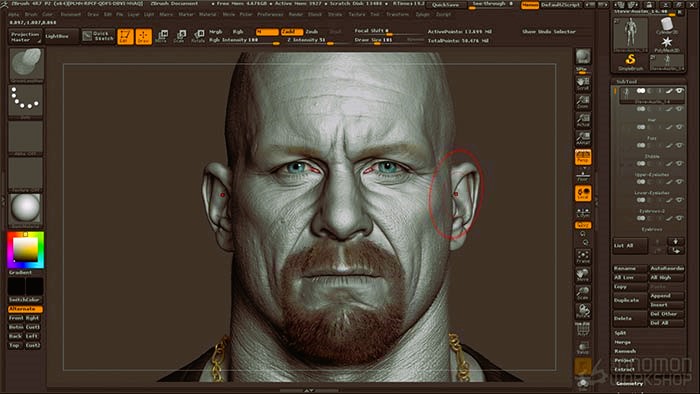
c) ZBrush 2025
For highly detailed character sculpting, ZBrush remains the go-to software. The latest version includes AI-assisted topology and enhanced real-time rendering capabilities.
3. AI-Powered Tools for Game Development
Artificial Intelligence is transforming game development by automating repetitive tasks and improving creativity.
a) ChatGPT for Coding Assistance
AI-driven coding assistants like ChatGPT help developers debug code, generate scripts, and optimize performance. They significantly reduce development time by providing instant programming support.
b) Promethean AI
This tool assists with world-building by automatically generating 3D environments based on text prompts, allowing designers to iterate faster.
c) Leonardo.Ai for Concept Art
Leonardo.Ai enables artists to generate high-quality concept art using AI, providing inspiration for character and level designs.
4. Sound and Music Production Tools
Game audio is just as important as visuals. The best tools for sound design and music composition include:
- FMOD – A powerful audio engine for adaptive soundscapes.
- Wwise – The industry standard for interactive sound design.
- Reaper – A lightweight but feature-rich DAW (Digital Audio Workstation) for game music production.
5. Project Management and Collaboration Tools
Large development teams need effective project management solutions to keep track of tasks, bugs, and updates.
- Jira – A popular tool for tracking issues and managing development workflows.
- Trello – A lightweight, visual task management tool for small teams.
- Discord & Slack – Essential for team communication and coordination in remote development setups.
Game development in 2025 is more accessible than ever, thanks to the rapid advancement of tools and AI-driven automation. Whether you’re an indie developer or part of a AAA studio, leveraging the right tools can streamline your workflow and enhance creativity.
🚀 Get ready to create the next generation of games with these cutting-edge tools!